
You might notice that your glasses don’t help you read street signs anymore, or maybe you’re squinting to recognize friends across the room. When standard glasses or contact lenses no longer provide you with the clear vision they used to, you could be dealing with low vision. At Lakeland Family Eyecare, we understand how frustrating it can be to feel like you’re out of options, but we want you to know that we can help.
Yes, some people with low vision can improve how they use their remaining eyesight, often through specialized treatments, innovative devices, and rehabilitation programs. We begin with an assessment, and then we can explore options that help support your confidence and independence.
What Low Vision Really Means for Your Eyesight
Low vision occurs when your vision remains poor even with your prescription glasses or contacts. It’s not complete blindness, but it makes everyday tasks much harder than they should be.
What Causes Low Vision?
Several conditions can lead to worsening eyesight. Age-related macular degeneration (AMD) affects your central vision, making it tough to see fine details. Glaucoma gradually reduces your peripheral (side) vision, creating blind spots you might not notice at first. Diabetic retinopathy damages blood vessels in your retina (the back of your eye), contributing to blurry or patchy vision.
What Does Low Vision Affect?
Daily activities become frustrating when low vision develops. You might struggle to read price tags while shopping, have trouble cooking safely, or feel uncertain walking down stairs. These challenges can affect your independence and confidence in ways that traditional vision correction methods can’t always address.
Vision Correction Options That Actually Work
Traditional Methods and Their Limits
Regular glasses and contact lenses work by adjusting how light enters your eyes. They’re excellent for common vision problems like nearsightedness, farsightedness, and astigmatism.
However, these standard corrections have limits when underlying eye conditions damage your retina or optic nerve (the nerve that sends signals to your brain). If your eye’s internal structures aren’t working properly, simply changing the lens prescription won’t solve the problem.
Treatment Approaches
MacuMira therapy is Canada’s first clinically proven treatment that uses specific wavelengths of light to stimulate cellular repair in your retina. It’s a noninvasive treatment that may help some patients with dry AMD, potentially slowing vision loss and sometimes improving vision quality.
Specialized low vision devices can improve your daily life. High-powered magnifiers can help you read books and labels, while telescopic lenses can make distant objects clearer. Electronic devices can enlarge text or convert written words to speech.
Vision rehabilitation programs can teach you practical skills for living with reduced sight. You’ll learn techniques for organizing your home, using public transportation safely, and maintaining your hobbies and interests.
Signs Your Vision Needs Professional Attention
It’s important to know the signs that your vision might be changing beyond what your glasses can help with. Your eyesight might be declining if you experience these common warning signs:
- Difficulty reading street signs clearly, even with your current prescription
- Trouble recognizing faces from normal distances
- Problems completing daily tasks despite wearing your glasses or contacts
- Increased sensitivity to bright lights or glare
- Blurry or distorted central vision when looking straight ahead
- Dark spots or missing areas in your field of vision
These symptoms often develop gradually, so you might not notice them right away. Regular eye exams can help detect changes before they significantly impact your quality of life.

How an Eye Care Professional Can Help
Comprehensive Vision Assessment Process
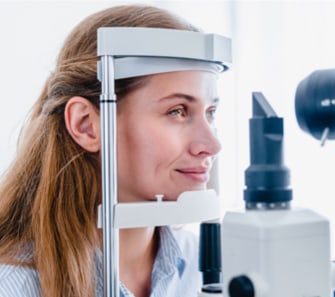
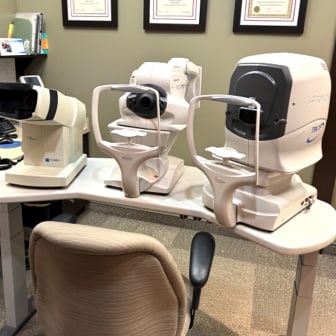
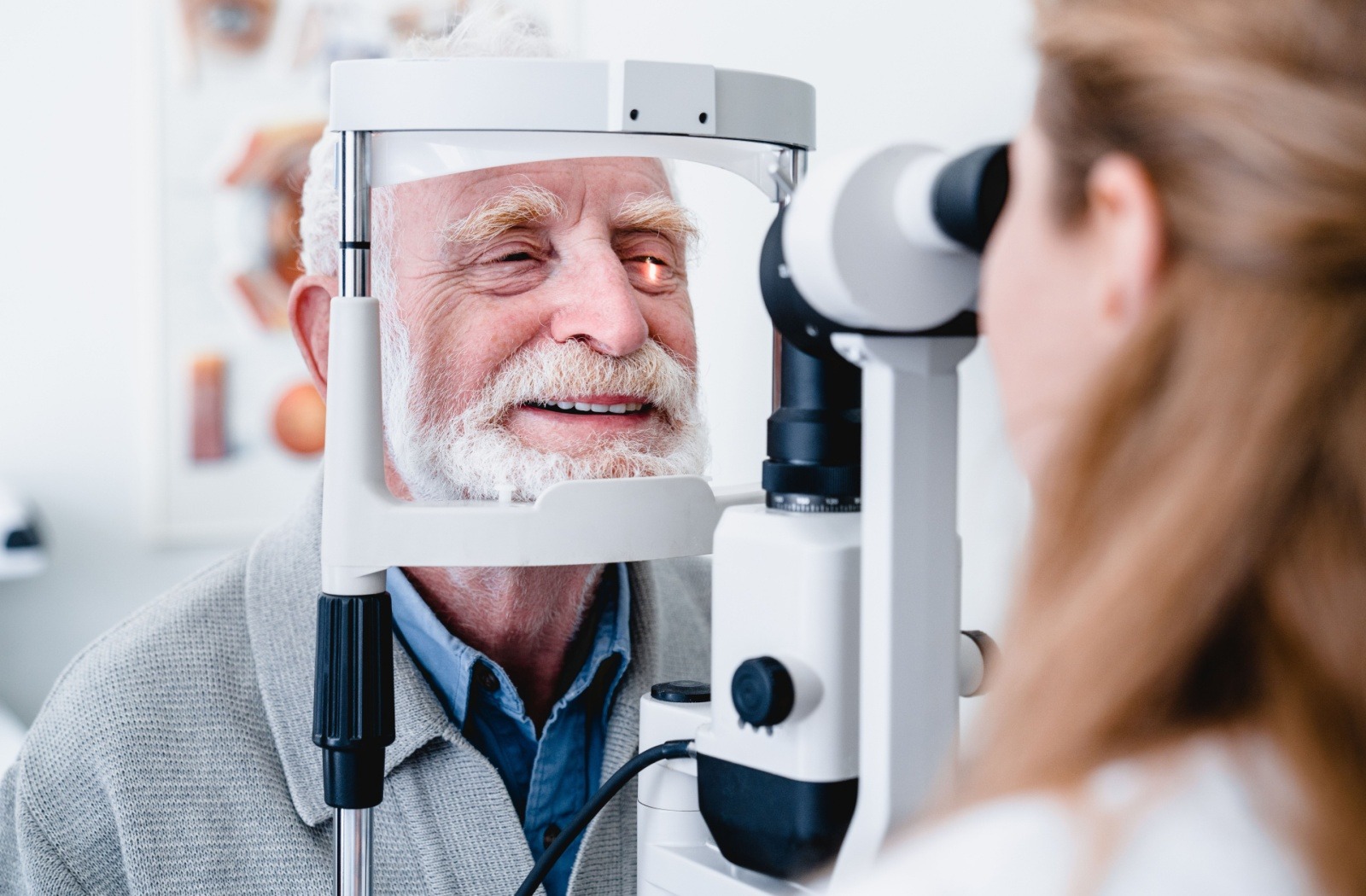
Modern eye care uses innovative technology to understand exactly what’s happening with your vision. For example, digital retinal photography captures detailed images of the back of your eye, helping the eye doctor detect damage or changes that might affect your sight.
OCT imaging creates cross-sectional pictures of your retina layers. This technology helps identify problems in their early stages, meaning our eye care team can help you manage or treat the condition sooner.
Personalized Treatment Planning
Everyone is different, and every case requires a slightly different approach, which is why our eye care professionals often combine multiple approaches. You might benefit from updated prescriptions, low vision aids, and vision therapy, all working together.
Regular monitoring helps track your progress and adjust treatments as needed. Your vision needs can change over time, so ongoing care helps you get the support you need.
Taking Action for Your Vision Health
Early detection makes a significant difference in protecting your eyesight. Many eye conditions respond better to treatment when caught in their initial stages, before major vision loss occurs.
Our team at Lakeland Family Eyecare provides comprehensive eye care services in both Bonnyville and St. Paul. Our practice has served families in the area for over 2 decades, using trusted diagnostic techniques like digital retinal photography and OCT imaging during our comprehensive exams.
Schedule Your Visit
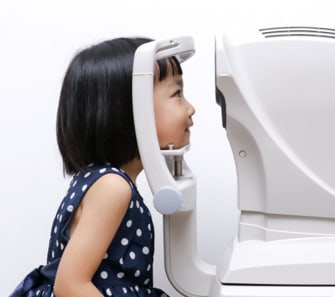
Whether you’re 6 months old or celebrating your 100th birthday, getting proper eye care helps preserve your vision and independence. Don’t wait until vision problems interfere with your daily activities: Schedule your comprehensive eye exam today.