
If you’ve noticed your child skipping lines while reading, or if you’re experiencing frequent headaches after close-up work, you may have wondered what could be going on. In some cases, these challenges don’t mean you need a stronger glasses prescription. At Lakeland Family Eyecare, our team knows these symptoms can be a sign of trouble with how your eyes and brain communicate.
Vision therapy is a structured program of eye exercises and activities designed to improve how your visual system processes information and coordinates movement. Think of it as physical therapy for your eyes and brain, helping them communicate more effectively to reduce strain.
Vision Therapy and Common Visual Problems
If you or someone you love is managing headaches or eye strain, it might be tempting to wonder if vision therapy could help relieve the symptoms. But not all eye problems can be helped by vision therapy. Instead, an assessment with your eye doctor is important because they can look at your eyes to determine what may be going on.
Vision therapy is designed for certain binocular vision, eye movement, and focusing disorders: Not for every vision problem.
Eye Movement and Focus Issues
Certain eye movement issues can cause difficulty with reading. For example, if your child’s eyes don’t move smoothly across text, it can cause them to jump around a paragraph or reread sentences multiple times. For adults, this can cause eye strain during computer work because your eyes have to work harder to track the words.
Problems switching focus between near and far objects can also make reading challenging. For kids, always switching between the notebook and the whiteboard can tire out or strain their little eyes, which may make them lose interest in school without knowing why.
Coordination and Processing Challenges
Your eyes need to work together to create a single, clear image for your brain to process. This is called teaming, and when it doesn’t work quite right, in cases like strabismus (crossed eyes), it can cause double vision or blurred text. Some kids will see overlapping letters and cover 1 eye to see clearer.
Poor depth perception can affect the ability to judge distances accurately during sports activities. Catching balls, hitting targets, or navigating stairs can become much more difficult and can even decrease confidence for kids.
A condition like amblyopia (sometimes called lazy eye) can make it more difficult for kids to learn in a classroom setting. Over time, the brain will begin to ignore the visual information coming in from the affected eye. Depending on its severity, amblyopia can make reading and other visually demanding classroom activities more difficult.
Some vision problems can contribute to symptoms that resemble learning difficulties, which is one reason comprehensive children’s eye exams are important.
How Vision Therapy Works and What to Expect
Once an eye doctor has determined that visual therapy might help your specific situation, you’ll be able to get started. Vision therapy uses a program of tailored eye exercises that target the specific vision problem you may be dealing with. Our eye care team can refer you to a clinic that offers personalized vision therapy treatment plants..
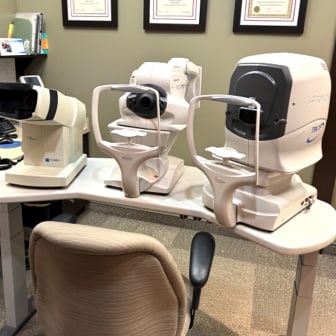
You may work with computer-based activities and specialized equipment during sessions. These tools can help retrain the visual system through repetitive, progressive exercises that are designed to gradually build stronger eye-brain connections.
The program follows a progressive skill-building approach over multiple appointments. Each session builds on the previous one, gradually increasing difficulty as your visual abilities improve.

Treatment Timeline and Session Structure
Initial Assessment
The vision therapy journey usually begins with a comprehensive vision assessment. This appointment isn’t just about determining if you have blurry vision: It’s about getting a complete picture of your eye health. Our eye doctor can evaluate how your eyes move, focus, and work together during various tasks. If vision therapy is recommended we will refer you for a consultation at a clinic that offers vision therapy.
Treatment Timeline
One of the most common questions our team is asked is how long vision therapy takes. The answer is that because everyone is so different, there is no exact timeline that works for everyone.
That being said, many people need approximately 12–24 weekly sessions depending on their specific condition and response to treatment. At our clinic, your session typically lasts 45–60 minutes and includes different activities based on your specific visual needs.
Regular Monitoring
Regular progress monitoring helps our team adjust exercises as your skills develop. Results build slowly, so patience and consistency are important.
Age Considerations and Timing
Children often see faster results because their visual systems are still developing and more adaptable to change. Their brains form new neural pathways more readily during these formative years.
That doesn’t mean adults can’t do vision therapy. In fact, adults can still improve with consistent practice and commitment to the program. While progress might generally take a little longer, many adults experience meaningful improvements in comfort and visual performance.
Getting Started with Vision Therapy
Before you can get started with vision therapy, it’s important to schedule a comprehensive eye exam to determine what may be going on. During your appointment, you’ll have a chance to talk to your eye doctor about your concerns, discuss your symptoms, and bring up any daily vision challenges you or your child is experiencing.
It’s often a good idea to bring examples of activities that cause difficulty, such as reading problems, sports challenges, or computer work discomfort. This can help our eye care team learn more about your individual needs and help us determine what may be going on.
Schedule Your Eye Exam
Our experienced team at Lakeland Family Eyecare can evaluate your eyes at both our St. Paul and Bonnyville locations. Every person on our team is committed to providing thorough, personalized attention that addresses your family’s visual needs. If you’re curious whether you or a loved one could benefit from vision therapy, we encourage you to book an appointment today.